

Empowerment Training: Being the Best Dog Parent
1 You are limited to controlling your own behavior. You can’t truly control your dog. The only being we can control is ourselves. Remember how much power there is in being irresistible. Be irresistibly fun to your dog. 2 3 Spend time with your dog – talk, laugh, listen, be interested in them, and be [...]

Being Wrong is Right
Loving Being Wrong Turns out that humans have a huge problem-- we love to be right. Unfortunately, this tendency can be dangerous and actually causes serious tragedies and even death, according to Being Wrong: Adventures in the Margin of Error author Kathryn Schulz. Schulz explains how planes crash as a result of a pilot refusing to admit error. As Schulz delves into the topic you [...]
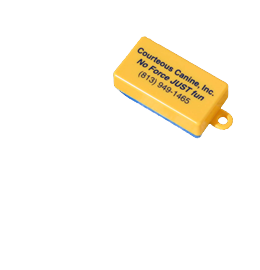
Dog Training 101: What is Clicker Training?
Dog Training 101: What is Clicker Training? By Angelica Steinker, M.Ed., CDBC, CAP2 edited by Kimberly "Kim" Archer, CPDT-KA, CTDI Clicker training is a training method using a handheld plastic box that makes a clicking noise when depressed by a trainer. Each click allows a trainer to mark a very precise moment in time, communicating to a dog exactly when they did something desired. The [...]

Pitfalls of Punishment
Author’s Note: Positive punishment is when you add something unpleasant when an undesirable behavior is displayed to discourage that behavior. Negative punishment is when you take away something pleasant when an undesirable behavior is displayed to discourage that behavior. Positive reinforcement is the addition of something pleasant when a desired behavior is displayed to encourage that behavior. Negative reinforcement is the removal of something unpleasant [...]

UNDERSTANDING “YOU GET WHAT YOU REWARD”
One of the most powerful truths in dog training is UNDERSTANDING “YOU GET WHAT YOU REWARD”, not what you want your dog to do. Dogs learn through consequences, and their behavior is shaped by what consistently results in attention, access, or reinforcement. Without realizing it, we often reinforce behaviors we don’t like simply because we’re responding automatically rather than intentionally. A common example is verbal [...]